First, build tools people will actually use.
Refining the consumer experience is our top priority during beta.
A provider dashboard can look polished, but if consumers are not engaging, there is little meaningful information for providers to see.
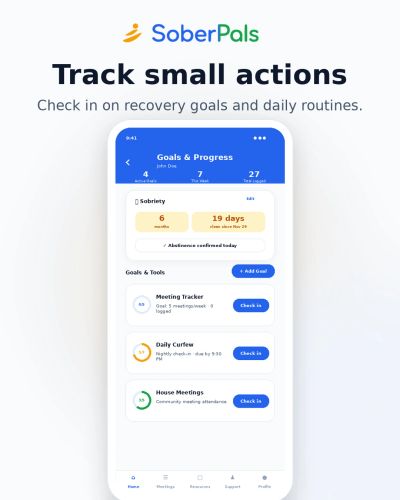
SoberPals starts with the person using the app: their goals, plans, reminders, support contacts, check-ins, meeting participation, reset actions, and progress over time.
Welvida Insight is the future organization and research layer designed to help turn that consumer activity into useful, respectful, permission-based insight.
Insight Should Help the Person First
Your progress should help you, not judge you.
For the person using SoberPals, insight should feel useful, respectful, and practical.
It should help answer simple questions:
- What have I been doing?
- What helped this week?
- What got in the way?
- When did I start slipping?
- Did I use support?
- Did I avoid support?
- What should I try next?
- What do I want someone else to understand?
A missed goal is not proof of failure.
It may be information.
It may show that a plan was too hard, a reminder came at the wrong time, anxiety got in the way, transportation failed, cravings increased, sleep broke down, or support was too hard to reach.
The goal is not to blame people.
The goal is to make the next useful step easier to see and take.
One Mission, Two Adherence Initiatives
Welvida is focused on one practical question:
What helps people follow through on the plans and goals they choose?
In recovery and behavioral health, follow-through is not just about medication reminders or appointment attendance. It can also mean showing up for meetings, staying connected to support, following a reset plan, completing daily routines, asking for help earlier, and returning to the plan after a missed goal.
For many people, the hard part is not knowing what might help. The hard part is doing it when depression drains motivation, anxiety makes simple steps feel overwhelming, cravings are loud, sleep is broken, medication side effects make the day harder, transportation falls through, shame takes over, or the plan suddenly feels too big.
People working to heal often carry more than one barrier at the same time. They may be managing symptoms, housing stress, finances, court requirements, family pressure, grief, trauma, work, school, or the fear of disappointing people again.
That effort deserves respect.
SoberPals by Welvida is designed around the belief that support should make the next useful step easier to see, easier to start, and easier to return to after a missed goal.
SoberPals helps people carry recovery and behavioral-health support on their phone: support plans, meeting goals, reminders, reset tools, trusted resources, and future support-copilot guidance.
SoberHomes by Welvida focuses on recovery housing as adherence support. Stable, supportive housing can reduce practical barriers to follow-through by creating structure, accountability, community, safety, and daily routines.
This is part of Welvida’s broader view of recovery housing as population-focused housing: sometimes people need more than instructions. They need a supportive environment that makes follow-through possible.
For people, families, and programs learning about sober living, Welvida also provides a sober living FAQ that explains how recovery housing can support structure, accountability, community, and daily recovery routines.
Welvida Insight is the future learning layer designed to connect these efforts over time: phone-based support plans, recovery housing workflows, staff sessions, participant-controlled sharing, and future copilot tools that help people take the next useful step before small problems become bigger crises.
This work is also connected to Welvida’s focus on the follow-through gap: the space between knowing what may help and actually being able to do it when life is stressful, unstable, overwhelming, or even starting to feel better.
To keep this work grounded in real experience, SoberPals is also collecting consumer quotes, lived-experience feedback, and research questions on the SoberPals research page.
A progress report shows what happened. A barriers report helps explain why.
Progress matters.
But progress alone is not enough.
If someone misses meetings, stops checking in, avoids calls, skips appointments, or stops using a plan, the most important question may be:
What got in the way?
Welvida Insight is being designed around both sides of the story:
- Actions completed
- Goals missed
- Check-ins recorded
- Meetings saved or attended
- Reset plans used
- Support contacts used
- Reminders completed
- Barriers reported
- Patterns over time
- Information the participant chooses to share
Better insight should lead to better support, not punishment.
Useful information should improve the next conversation.
Better information should lead to better support.
Professionals and caregivers often need better ways to understand what is happening between visits and calls.
When sharing is authorized, Welvida Insight may help them notice changes earlier, ask better questions, adjust support, and offer help before small problems become crises.
But more data is not automatically better.
The right question is:
What information is useful, actionable, respectful, and timely?
When sharing is authorized, Welvida Insight may help organizations and supporters understand:
- What goals were completed
- What goals were missed
- What barriers appeared
- What support actions were used
- Whether a reset plan may be needed
- Whether the plan is too difficult
- Whether follow-up should happen earlier
- What should be discussed at the next appointment, group, or check-in
The goal is not surveillance.
The goal is better conversations, better plan adjustment, and earlier support.
Future Insight
From what happened to what may happen next.
The beta version starts with basic progress, barriers, reports, and shared information.
As consumer engagement grows and the dataset improves, Welvida can move beyond simply showing whether a plan was completed today or this week.
Over time, Welvida Insight may help answer deeper questions:
- How likely is this plan to be completed next week?
- Which goals are becoming harder to complete?
- Is the person beginning to disengage?
- Are missed actions, mood changes, cravings, or reduced support contact signaling decline?
- Would this person benefit from a reset plan?
- Would this person benefit from a different intervention?
- Should a supporter reach out earlier?
- Which plans work best for which people and contexts?
This is not about replacing human judgment.
It is about helping people and teams notice patterns earlier, ask better questions, and adjust support before small problems become crises.
For Researchers and Implementation Science
From what happened to what may happen next.
The beta version starts with basic progress, barriers, reports, and shared information.
As consumer engagement grows and the dataset improves, Welvida can move beyond simply showing whether a plan was completed today or this week.
Over time, Welvida Insight may help answer deeper questions:
- How likely is this plan to be completed next week?
- Which goals are becoming harder to complete?
- Is the person beginning to disengage?
- Are missed actions, mood changes, cravings, or reduced support contact signaling decline?
- Would this person benefit from a reset plan?
- Would this person benefit from a different intervention?
- Should a supporter reach out earlier?
- Which plans work best for which people and contexts?
This is not about replacing human judgment.
It is about helping people and teams notice patterns earlier, ask better questions, and adjust support before small problems become crises.
Insight can help study what makes support usable in real life.
Many interventions depend on repeated action outside the clinic, group, court, recovery home, or treatment program.
But real-world follow-through is affected by stress, symptoms, anxiety, cravings, isolation, transportation, reminders, social support, trust, and whether the plan feels possible in the moment.
Welvida Insight may help researchers and organizations explore questions such as:
- Which support plans are actually used?
- Which tools are ignored or removed?
- Which reminders help?
- Which reminders overwhelm people?
- What barriers appear most often?
- What support contacts are used?
- When do people disengage?
- What early signals suggest someone may need help?
- What information improves the next support conversation?
- How can plans become easier to use?
The goal is to understand what helps, what gets in the way, and how support can become more practical, measurable, and adaptable.
Help shape insight that starts with real consumer engagement
SoberPals and Welvida are building tools to help people use support plans, understand progress, identify barriers, and get support earlier.
Founding Beta Partners can help define what insight should look like for consumers, supporters, providers, organizations, and researchers.